

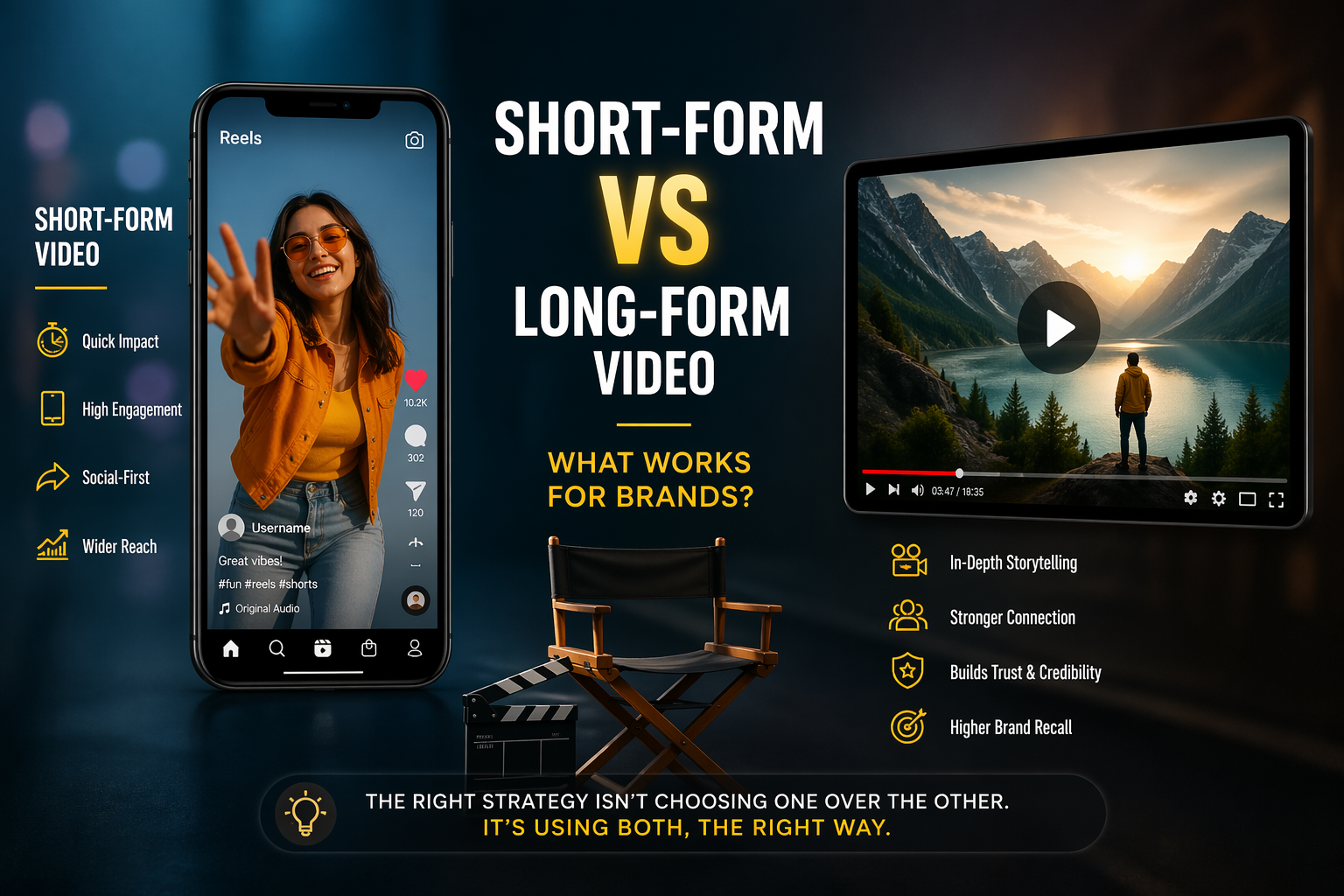
Video content is at the core of modern marketing. However, one key question brands often face is: Should we focus on short-form or long-form video?
While both formats are powerful, choosing the right one depends on your objectives, audience, and platform. Therefore, understanding how each format works is essential to building an effective video strategy.
What is Short-form Video?
Short-form videos are typically under 60 seconds and are designed for quick consumption. Platforms like Instagram Reels, YouTube Shorts, and TikTok have made this format incredibly popular.
In other words, short-form content is all about capturing attention instantly and delivering a message quickly.
What is Long-form Video?
Long-form videos usually range from a few minutes to even longer durations. These include brand films, corporate videos, documentaries, and in-depth storytelling content.
Unlike short-form videos, long-form videos focus on depth, narrative, and emotional engagement.
Key Differences Between Short-form and Long-form Video
- Attention Span vs Depth
Short-form videos are designed to grab attention within seconds. On the other hand, long-form content builds a deeper connection over time.
- Platform Usage
Short-form works best on social media platforms. Meanwhile, long-form content performs well on websites, YouTube, and presentations.
- Content Objective
Short-form is ideal for awareness and quick engagement. In contrast, long-form videos are better suited for storytelling and brand building.
- Production Approach
Short-form videos are faster to produce and more frequent. However, long-form content requires detailed planning and higher production value.
When Should Brands Use Short-form Video?
Short-form content works best when the goal is visibility and engagement.
Use It For:
- Product highlights
- Social media campaigns
- Quick brand messaging
- Trends and viral content
Moreover, it helps brands stay relevant in fast-moving digital spaces.
When Should Brands Use Long-form Video?
Long-form videos are ideal when brands want to tell a story or explain something in detail.
Use It For:
- Brand films
- Corporate videos
- Campaign storytelling
- Case studies and testimonials
In addition, it helps build credibility and emotional connection.
The Real Answer: It’s Not Either/Or
Many brands make the mistake of choosing one format over the other. However, the most effective strategy combines both.
For instance, a brand film (long-form) can be broken down into multiple short-form assets for social media.
This approach ensures:
- Maximum reach
- Consistent messaging
- Better ROI on production
How to Build a Balanced Video Strategy
- Start with a Core Film
Create a strong long-form video that communicates your main message.
- Repurpose into Short-form Content
Break it into shorter edits for reels, ads, and digital platforms.
- Adapt for Each Platform
Different platforms require different formats. Therefore, customise accordingly.
- Maintain Consistency
Ensure you’re messaging and visual identity remain consistent across formats.
Short-form and long-form videos are not competitors; they are complementary tools. While short-form drives attention and engagement, long-form builds depth and connection.
Ultimately, the brands that win are the ones that use both strategically, creating content that is not just seen but remembered.